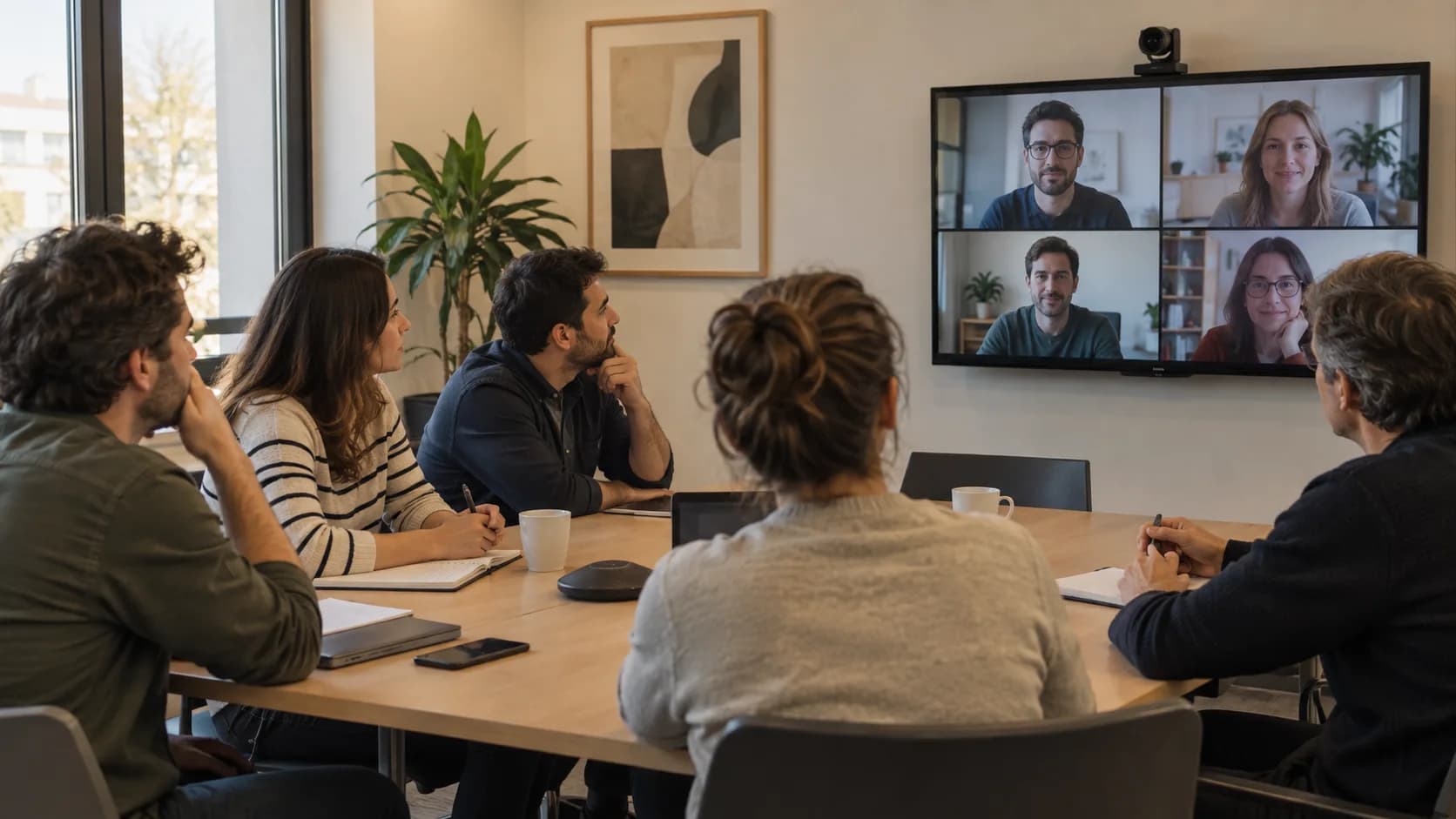
Hybrid events arrived out of necessity and have stayed by logic: they fill the room while at the same time multiplying reach with attendees connecting from anywhere. But most people fall into the same trap: thinking a hybrid event is "the usual event with a camera at the back". It isn't. It's a format with two distinct audiences that demand two experiences designed at the same time. At Zenor Audiovisual we produce the technical side of hybrid corporate events across Spain, and these are the keys that separate a hybrid that works from a broadcast nobody finishes watching.
What a hybrid event is (and isn't)
A hybrid event combines in-person attendees with an online audience connected in real time and in both directions: those at home see and hear what's happening in the room, and the room sees and hears the remote attendees when they speak. That's the difference from a simple livestream. Technically it draws on two worlds: event audiovisual production and videoconferencing, and the challenge is joining them without either audience noticing the seams.
Design two experiences, not one broadcast
The in-person attendee experiences the coffee, the networking and the energy of the room; the online attendee only gets what reaches them through the screen. Give them a flat two-hour feed and they'll leave. That's why the programme has to be planned in parallel: shorter blocks for the stream, exclusive content for remote attendees (an interview between talks, for example), a host or moderator who speaks explicitly to the camera, and clearly signposted breaks so people at home know when to come back. The online audience isn't a second-class viewer: it's half your audience.
The technical setup that makes the connection possible
Multi-camera production with varied shots and the presentations built into the feed.
Clean audio in both directions: a dedicated mix for the stream and a clean return from the remote participants into the room.
A screen in the room so remote speakers or attendees have a physical presence in front of the audience.
A dedicated connection and, if you ask for it, back-up over 5G and Starlink: the online audience disappears if the network drops.
A technician moderating the online side throughout the event, not just at the start.
Real interaction: getting the online audience to genuinely take part
Enabling a chat isn't interaction; it's a mailbox. Participation has to be provoked: unified Q&A where questions from online attendees are shown on screen in the room with the same weight as questions from those present, live polls whose results appear on the stage screen, and a dedicated moderator who gives remote attendees a voice by name. When someone asks a question from home and sees it answered on stage, they stop being a spectator and become an attendee.
“In a hybrid event, the room's applause has to be heard at home, and the question from home has to be heard in the room. When that happens, the format works.”
Mistakes that kill a hybrid event
Using the camera's or the meeting platform's audio instead of a professional mix.
Pouring all the effort into the room and treating the online side as a last-minute add-on.
Blocks longer than 45 minutes with no change of pace or interaction for remote attendees.
Not rehearsing remote contributions: the speaker who "can't be heard" breaks the whole event.
Forgetting the recording: the on-demand content afterwards is the event's second life.
The ultimate advantage of the hybrid format is that everything can be measured: connected attendees, average watch time, questions sent, later downloads. Data that justifies the investment to management and shapes the next event. If yours is a congress or a professional conference, combine this guide with our audiovisual checklist for a congress and with our technical conferences service to leave no loose ends.
Tell us what your hybrid event is like (the room, whether there are remote speakers, how many people will connect) and we will suggest the technical production so that the room and the people at home can hear each other.Request a quote