
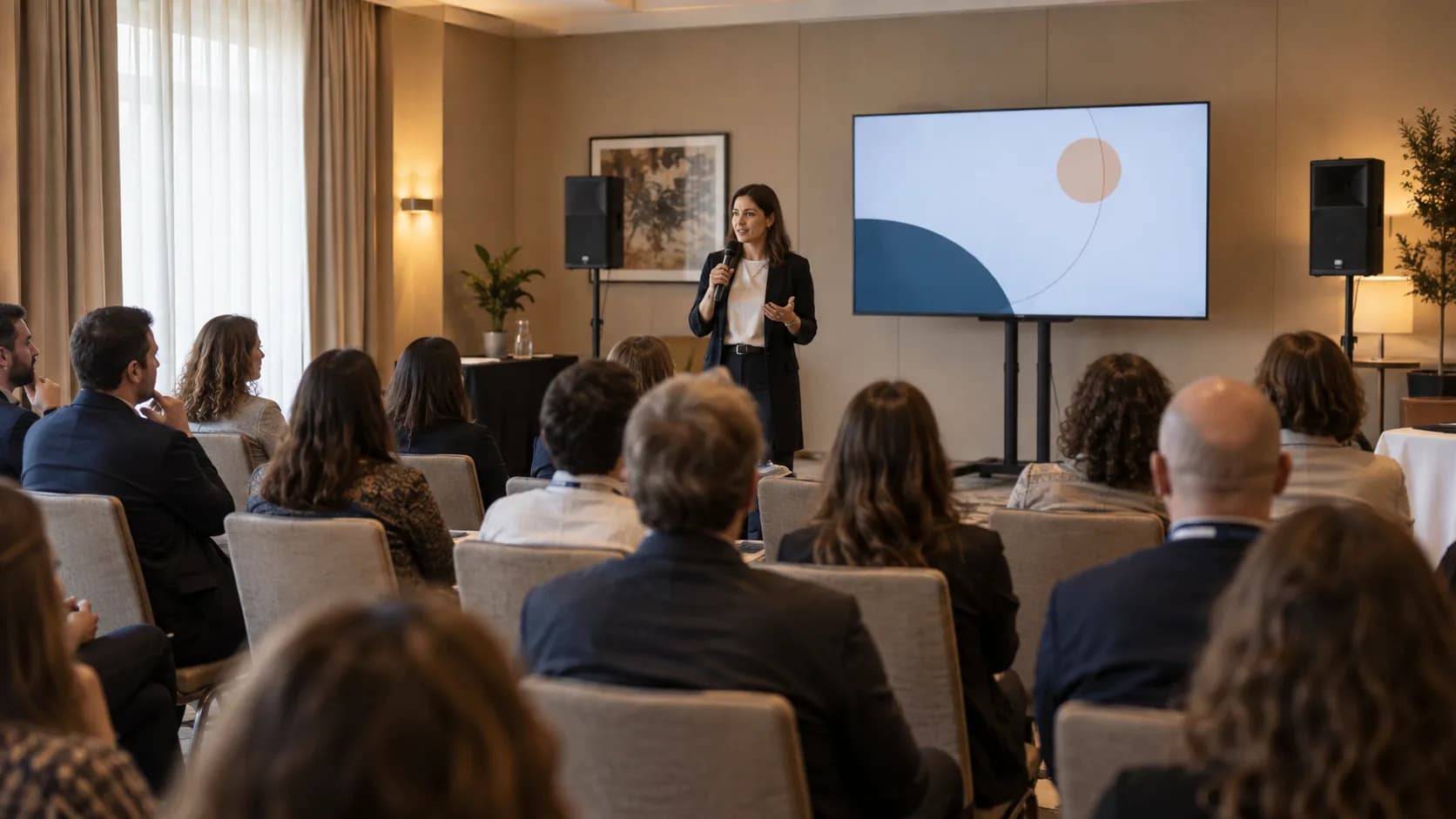
A product presentation is one of the few events where everything revolves around a single moment: the instant the product is revealed to the audience. If that second lands, the brand wins headlines, photos, videos and conversation. If it falls flat, it doesn't matter how good the catering was. As an audiovisual production company specialising in corporate events, at Zenor we've put together launches of every kind, and one pattern is clear: the ones that make an impact aren't the ones that spend the most, but the ones that design that moment best. Here's how it's built.
Define the wow moment before anything else
Before choosing the venue, date or menu, decide how the product will be unveiled: does it appear on an illuminated pedestal as the room lights go down? Is it revealed on screen with a synchronised video? Does the CEO bring it out by hand after a countdown? That moment defines the whole technical production: the lighting, the sound, the on-screen content and the running order all work to build maximum tension toward it. Our advice: pick three key benefits of the product and translate each one into something the audience can see, hear or touch. Everything else is surplus.
Staging and LED screens: the product takes centre stage
The staging of a modern launch is almost always built around LED screens: custom-sized stage backdrops, moving content that wraps around the presenter, and the absolute black that a projector simply can't deliver. An LED screen also allows for creative formats — columns, floors, curves — that turn the stage itself into part of the message. If you want to see how far the format can go, in this article we look at giant LED screens at concerts and trade fairs and what they teach us for brand events.
Light and sound: directing the audience's attention
Stage lighting is the cheapest and most powerful tool for directing attention: darkening the room, cutting out the presenter with an overhead spot, bathing the product in a brand colour at the exact right moment. Sound does the rest: music that builds, a well-placed silence before the reveal, and a voice that comes through flawlessly thanks to professional sound equipment properly tuned to the room. Light, sound and video have to be synced to the second, and that takes rehearsal.
- A running order timed to the second for the reveal moment: who's speaking, what's playing, what's on screen
- A full technical rehearsal with the actual presenter, not a stand-in
- On-screen content in the LED's native resolution, tested on the final equipment
- A backup plan for every critical element: microphone, playback, lighting control
- Photographer and video team briefed on where the lighting peaks will be, so the shot isn't missed
Streaming and follow-up content: the event doesn't end when the lights go down
A launch generates its biggest return after the event: press releases, social media, a highlights video, a recorded demo. Plan for a live stream from the outset for press, distributors or international teams who can't attend, along with a multi-camera recording designed for cutting clips. If your presentation combines an in-room audience with a remote audience that carries its own weight, you'll want to see how we approach it in hybrid events: in-person and online.
“In a launch, you're not selling a product: you're selling the memory of the moment it was first seen. The technical production exists to manufacture that memory.”
Mistakes we see repeated (and how to avoid them)
- Choosing the venue before designing the wow moment: then the ceiling isn't high enough for the LED
- 40-slide corporate decks that kill the pace of the live event
- Not rehearsing the product demo under the real network and lighting conditions
- Forgetting the streaming audio: the room sounds great, the online broadcast doesn't
- Leaving technical production for the end of the budget, when there's no room left
Our recommendation is simple: sit down with the technical team at the concept stage, not a week before. When audiovisual production comes in early, the budget goes further and the wow moment is designed with intent. You can see real examples of our set-ups in our projects.